Concept To Completion: What To Expect From Full-Service Video Production
In today’s media-saturated world, video content is essential for businesses and brands to connect with their audience. Whether you’re looking to create a corporate video, commercial, documentary, or promotional content, full-service video production offers a comprehensive solution that handles every aspect of the process, from the initial idea to the final edit.
If you’re new to video production, you might wonder what a full-service experience entails. This article explores each phase of full-service video production to help you understand what to expect from concept to completion.
1. Pre-Production: Laying the Groundwork for Success
The first step in any full-service Nashville Video Production is the pre-production phase, which serves as the foundation for the entire project. During this stage, your production team will work closely with you to refine your vision and lay out the logistics of the project.
a) Concept Development
Before you start making a movie, you should think carefully about what you want to achieve with it. Are you trying to teach your audience something, tell an interesting story, or sell a product? They will take your ideas and help you make them into a concept that works and fits with the message of your brand.
The team will also talk about the tone and style of the video while they are coming up with ideas. Should it be like a movie, a report, or something fun? Before moving on, this step makes sure that everyone agrees on what the next step should be.
b) Scripting and Storyboarding
Once the concept is clear, the next step is creating the script and storyboard. The script is the backbone of your video, laying out dialogue, narration, and action in a coherent structure. Whether you need a corporate explainer or a narrative-driven video, the script defines the content.
Simultaneously, a storyboard is created to provide a visual representation of the shots and sequences. Think of it as a comic strip that illustrates key scenes, camera angles, and visual flow. Storyboarding is a critical tool in pre-visualizing the final product and ensuring that the team captures the necessary footage.
c) Location Scouting, Casting, and Scheduling
Location scouting involves identifying the perfect places to shoot your video. If your project requires specific settings, like an office, outdoor space, or studio, the production team will handle the logistics of securing those locations.
Casting is another vital component if your video involves actors, spokespeople, or interviews. The full-service production team will manage auditions and select talent that fits your video’s tone and message.
Additionally, scheduling ensures that the production proceeds smoothly. From coordinating shoot days to aligning availability between the crew, talent, and locations, this step organizes everything to minimize delays or complications during filming.
2. Production: Bringing the Vision to Life
During the production process, your ideas start to come to life and the script is put into action. During this phase, the video is actually filmed, which usually includes a lot of moving parts to make sure every shot is perfect.
a) Directing and Filming
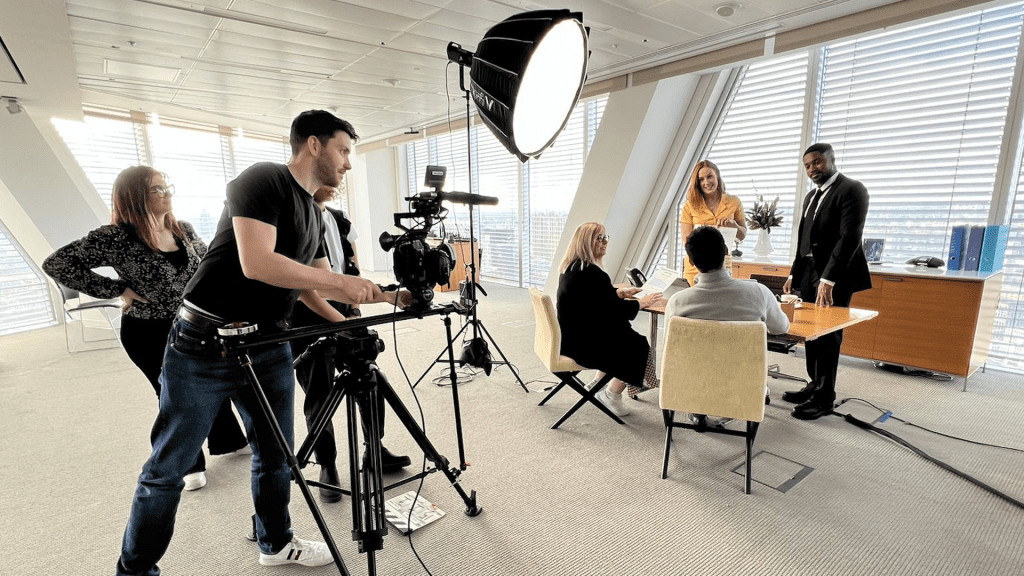
During the shoot, the director oversees the creative aspects, guiding the actors, presenters, or interviewees to deliver their best performance. Full-service production teams come with skilled directors who understand how to capture the desired tone, pace, and emotions. The director ensures that the footage aligns with the initial concept and script while making any necessary adjustments on the spot.
The cinematographer or camera operator captures each scene, paying close attention to camera angles, lighting, and framing. High-quality video production requires expertise in lighting setups and camera techniques to achieve professional results.
b) Sound and Lighting
Quality audio and lighting are just as important as the visual aspects of a video. Sound technicians ensure that dialogue, ambient noise, and background music are recorded at the highest quality. Meanwhile, lighting designers set up the necessary lights to create the perfect ambiance and visual clarity for each shot.
Whether filming indoors or outdoors, sound and lighting play crucial roles in the production’s final polish.
c) On-Set Problem Solving
Despite careful planning, unexpected challenges can arise during filming. A professional full-service production team is skilled in problem-solving, whether it’s dealing with bad weather, technical malfunctions, or scheduling conflicts. The team’s ability to adapt ensures that the production stays on track without compromising quality.
3. Post-Production: Shaping the Final Product
Once filming is complete, the project moves into post-production, where the raw footage is edited, refined, and transformed into a cohesive final product. This stage involves several steps that bring together the visual, audio, and creative elements.
a) Video Editing
At the heart of post-production is video editing. The editor takes all the footage captured during production and assembles it into a logical and compelling sequence. This involves cutting unnecessary scenes, choosing the best takes, and arranging shots to tell the story effectively.
Editing also involves color correction to adjust brightness, contrast, and color balance, ensuring that the video looks polished and consistent. For projects requiring special effects, animations, or graphics, these elements are added during the editing process to enhance the final result.
b) Sound Design and Music Selection
Great videos don’t just look good—they sound great, too. The sound design process involves cleaning up audio, balancing sound levels, and adding necessary effects. If the video includes voiceovers or interviews, the sound team ensures clear and crisp audio.
Music is a big part of how a video makes you feel. Whether you need an inspiring soundtrack, a dramatic score, or subtle background music, the production team selects the perfect music to complement your video.
c) Visual Effects, Motion Graphics, and Titles
Post-production is where these elements come to life for videos that require visual effects, motion graphics, or animated titles. Whether it’s dynamic text overlays, animated infographics, or advanced CGI, these enhancements elevate your video’s impact.
4. Final Delivery: A Polished Video That Meets Your Goals
Once post-production is complete, the video is ready for final delivery. At this stage, the production team will export the video in the required formats for your specific needs, whether for online distribution, broadcast, or internal use.
a) Client Review and Revisions
Before the video is officially finalized, you’ll have the opportunity to review the first cut and provide feedback. Full-service production teams typically include revision rounds to fine-tune the video, ensuring that it meets your vision and expectations.
b) Distribution and Promotion
Once the final product is approved, the production team can also assist with distribution, ensuring the video is optimized for different platforms. Whether you need your video for YouTube, social media, a corporate website, or other media outlets, full-service production ensures it’s ready for optimal viewing.
Conclusion
Full-service video production offers a comprehensive, end-to-end solution that takes your project from initial concept to a polished final product. You can expect a smooth process and a high-quality movie that connects with your audience if you get professional help during pre-production, production, and post-production.
By working with a skilled full-service team, you’ll not only save time and effort but also ensure that your video production exceeds expectations, delivering the results you need for your brand or business.